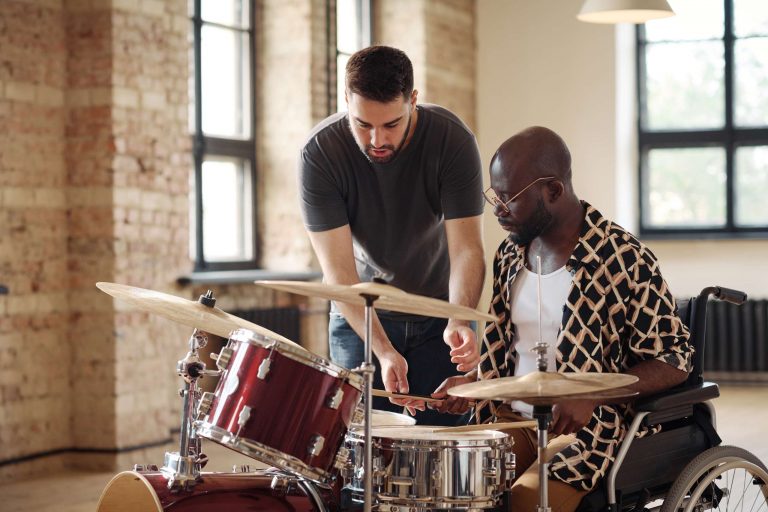
There is a point in the process of learning anything important, when it seems like nothing is happening. Initially, there is so much improvement that it’s almost weekly that you notice something new. That’s when you’re on the Plateau Phase. When I am in the Plateau phase, it can be frustrating because it seems like there is no difference from yesterday to today. However, that’s not true. It’s just that the Plateau phase is the time when what you’ve learned so far is being integrated. It’s like when you build the first floor of a building, and then before adding the next floor, you add some extra support. You can’t see this extra support from the outside but you know it’s there. When you are in the Plateau phase, you are reinforcing your base. You are making sure that everything you’ve learned is automatic, so that you can add the next piece.
So how do you get out of the Plateau phase? Change something. When I was learning the drums, it was either play along with the song faster or slower. When I was learning to play tennis, it was either hit with more topspin or slice. When I was learning golf, it was either hit the ball further or shorter. The idea is to not change everything. That would be moving to something new. You still need to keep the majority of what you learned intact. You just need to modify it slightly, so that it creates a little extra stress on your brain. You want your brain to say, “Hey, this isn’t the same anymore.”
Another thing you need to do when you are in the Plateau phase is to have faith. There are a lot of people that think they’ve hit their plateau and stop. Don’t. Most of the time, the greatest improvements you will make will come after you’ve been on the Plateau for a while. In most learning processes, the line of improvement is not straight up. It’s up, then sideways, then up, then sideways, etc. So, if you stop, you will never see the next upward spike.
Most skills require a long time to learn. When you are on the Plateau phase, you need to just enjoy the journey, because when you finally see your improvements again, it will be worth it. It’s not just about the destination. It’s about the journey. How long does it take to get to the Fluency phase? Well, it depends on what you are learning, how much you are practicing and how well you are practicing.
Remember, fluency is when you have mastered the skill. However, don’t worry too much about the length of time. It’s better to focus on just enjoying the process.